





Schedule Online Admission Counselling Meeting with Us
Apply Now - 2026
Award Image
Award Image
Award Image
Award Image
Award Image
Award Image
Award Image
Award Image
Award Image
Award Image

Faculty of Architecture, Design & Planning

BACHELOR OF DESIGN (INTERIOR DESIGN)

Program Details

Design brings meaning to the built environment. This programme prepares students to take on all new context challenges and technological advancements in the field of interior, graphic and multimedia medium.Paradoxically, traditional skills have become more necessary than before. Quality and creative solutions contextual to the user’s needs are still a basic human input.

ID - Interior Design
The Interior Design program within the B.Des curriculum focuses on creating functional and aesthetically pleasing spaces. Students learn to analyze client needs, develop design concepts, and select appropriate materials and furnishings. Emphasis is placed on spatial planning, lighting design, and the integration of sustainable practices, preparing students for diverse roles in the interior design industry.

FD - Furniture Design
The Furniture Design program in B.Des cultivates innovative approaches to crafting functional and expressive furniture. Students explore materials, construction techniques, and ergonomic principles to create designs that address contemporary needs. Emphasis is placed on understanding user interaction, manufacturing processes, and the integration of sustainable practices. This program prepares students to design for diverse contexts, from mass production to bespoke creations.

PD - Product Design
The Product Design program within the B.Des curriculum focuses on creating user-centered and innovative products. Students learn to research user needs, generate design concepts, and develop prototypes. Emphasis is placed on understanding manufacturing processes, material selection, and the integration of design thinking methodologies. This program prepares students to design for diverse industries, from consumer electronics to medical devices.

GVC - Graphics and Visual Communication
The Graphics and Visual Communication program in B.Des equips students with the skills to convey messages effectively through visual mediums. Students learn principles of design, typography, and image-making, exploring both digital and traditional techniques. Emphasis is placed on understanding audience, context, and the power of visual storytelling. This program prepares students for careers in branding, advertising, web design, and other visual communication fields.

Course Structure

The matrix of Course structure having eight semesters is made up of the following “Areas”

  1. Arts & Craft
    • Basic Design
    • Design Graphic Skills
  2. Design
    • Design
    • Humanities
    • History of Design
    • Theory & Criticism
  3. Skills
    • Hand Skills
    • Computer Based Skills
  4. Technology
    • Building Material
    • Interior Materials
    • Construction
    • Technology
    • Services & Structure
  5. Practice
    • Professional Practice
    • Office / Field Training
  6. Environment
    • Environmental Science
    • Sustainability
    • Climatology
  7. Supplementary
    • Related Study Program (RSP) / Electives / Communication Skills
Our Studio

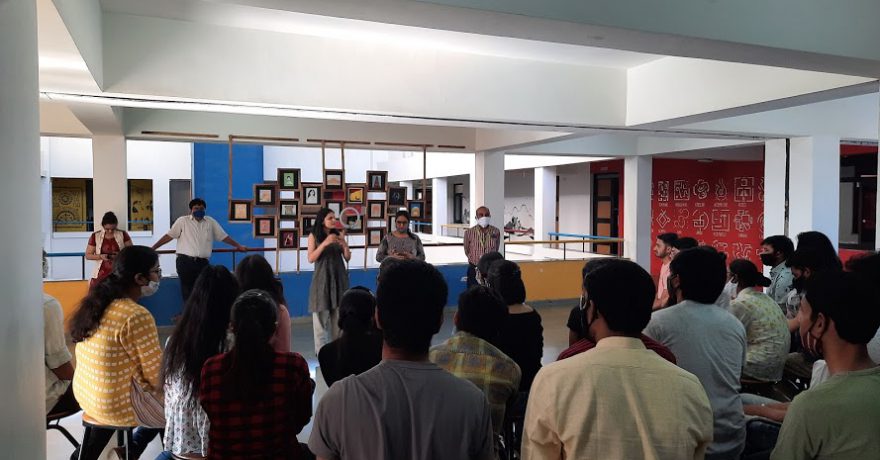
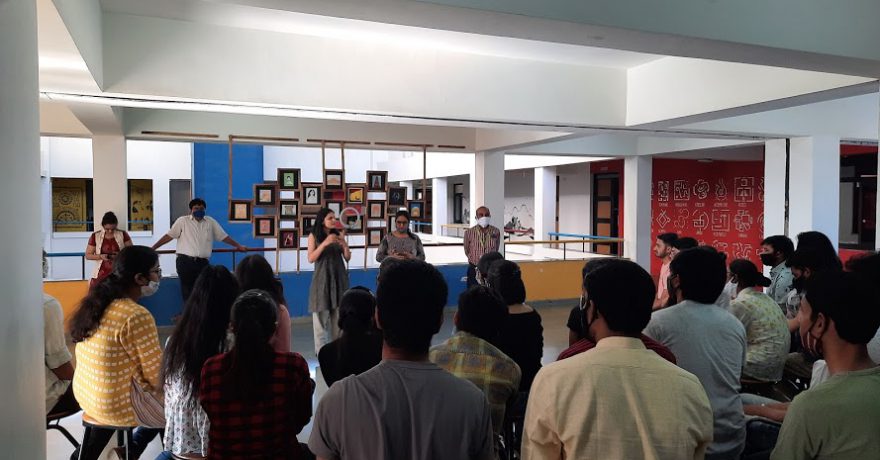
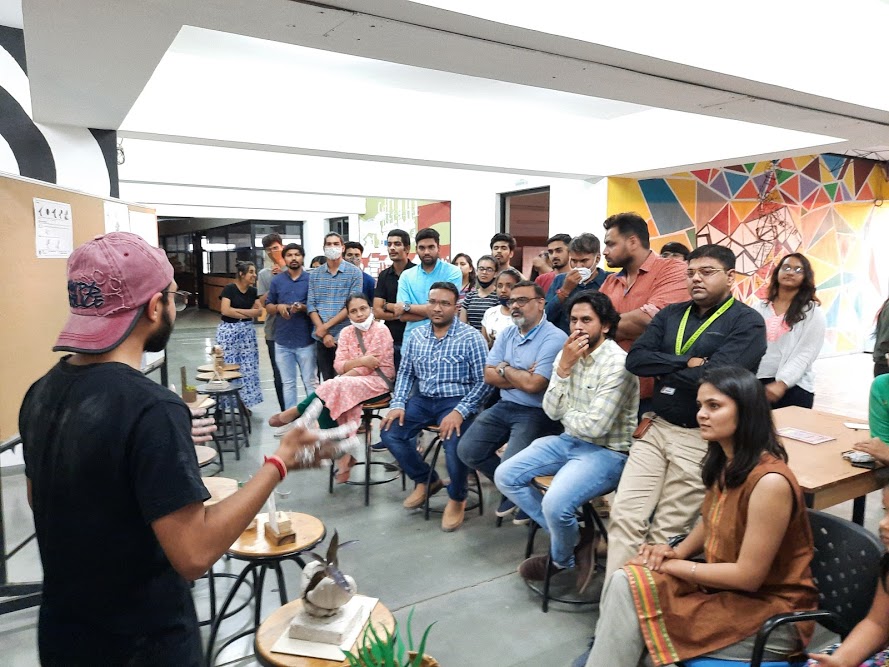
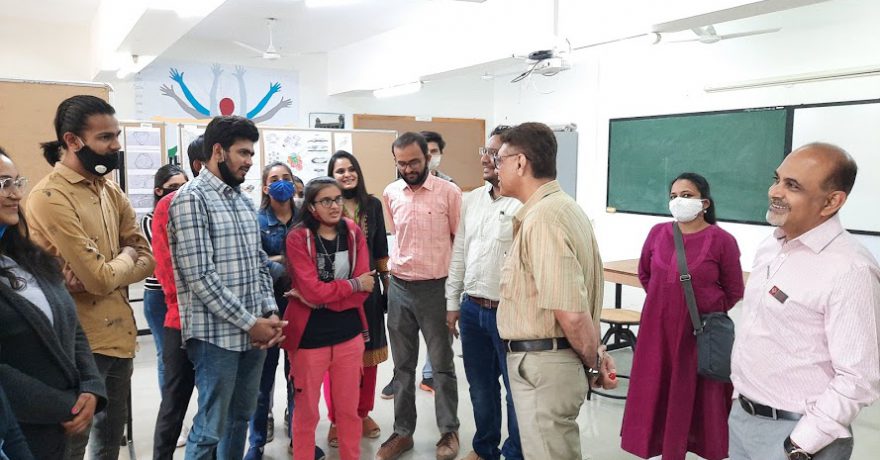
The studio space is a soul space for the Institute of Architecture and Planning as the learning at the institute is centered around a studio. The purpose of a studio is beyond a mere classroom as apart from the lectures and project work, a lot of hands-on work – "learning by doing" takes place in a studio space. Studios are large spaces where design work can happen and students can engage beyond instructional time and faculty guidance.

There are a total of 6 studios for BArch programme. Each studio is around 145 sq. Mts. in size and connected to a corridor and a courtyard in the centre. The studios are designed to allow maximum natural light and ventilation in the working space. The large open space in front of each studio is an engine for productive discourse. The design reviews and class discussions take place in this space. Each studio is ICT Enabled studio.
Fees

Tuition Fees

₹ 160000

Contact No.:

+91- (M) 9974009275 8460652622
+91- (M) 9712996113

Email

admission.ioa@ganpatuniversity.ac.in

For International Students

Fee for SAARC & OTHER ASIAN ₹ 125000
Fee For International $ 3000

Eligibility

Passed 10+2 examination in any stream from a recognized board. Obtained at least 45% marks (40% in case of candidates belonging to reserved category) in the qualifying Examination.

Program Outcome

  • Development of Skills: Contextualise and convey ideas and intentions eloquently through visual, oral and written media.
  • Development of Skills: Analyse information, experiences and formulate & develop independent judgements for articulating reasoned arguments related to design process and its outcome.
  • Development of Skills: Select and make appropriate use of materials, processes and sustainable approach in interior design.

Program Educational Objectives (PEO)

  • Development of Understanding & Knowledge: Demonstrate a critical awareness of the principles that underpin the design process, including aesthetic, functional and technical requirements of the project.
  • Development of Understanding & Knowledge: Apply critical thinking through analysis and communication that underpins the historical and contemporary theories of architecture, art and design, technology and human science.
  • Development of Understanding & Knowledge:Demonstrate a comprehensive awareness of architecture and planning appropriate and relation to the design discipline.
  • Development of Understanding & Knowledge:Demonstrate an awareness of the key developments of current trend and emerging technologies and of inter- and multi-disciplinary approaches related to interior design.
  • Development of Skills: Demonstrate the application of creative skills with reference to comprehensive design solutions in response to a brief.
  • Development of Skills: Integrate critical design thinking, research and analytical skills from visual perception to physical experience of form, space and in relation to time.

Career Path

  • Our graduates with strong technical & sensible competency to become professional Interior designer leading to a successful career.
  • Our graduates with skills and knowledge to understand and solve complex designing problems for the betterment of the society and environment.
  • Our graduates with professional ethics and ethos for lifelong learning contributing to the integrity of their profession.
  • Our graduates with development of lifelong learning and advance their careers through activities such as participation in professional organisations, involvement in R & D and seeking higher education.
  • The programme follows modern dynamic curriculum with wide range of courses.
  • Wide range of electives nurture interests of students.
  • Students are encouraged to develop critical thinking.
  • Hands on practical experience is imparted through workshops.
  • Scholarship are given to meritorious students.
  • The Institute is equipped with State-of-the-art Material lab, Climate Lab and Computer lab.
  • The Institute has academically strong core faculties with diverse background.
  • Expert lectures and seminars by professionals and academicians are regularly organised.

Syllabus

New Syllabus
Subject Name Subject Type Subject Code Subject Credit Subject Comment Attachments
DESIGN STUDIO - I Core 3IA01DS 4
  • To introduce students to the language of architecture and characteristics of space through creative thinking.
  • Introduction of basic fundamentals of design and design vocabulary with respect to function and aesthetics.
  • Developing basic skill of expression that involves the ability to perceive, abstract and create the design of objects and spaces.
  • Form and Space Making. Experiencing movement through space and time. Anthropometry and space.
Read More
BASIC DESIGN - I Core 3IA02BD 6
  • The basic design as an important process, which aims to shape the design sensitivities of students and to develop their communicative abilities as well as their problem-solving skills.
  • In the Foundation Design Studio, first-year architecture, interior, and fine arts students are introduced to fundamental design principles, methods, visual judgment, and the creative process.
  • Studio exercises are intended to provide hands-on practice in ordering a design inquiry and structuring conceptual and visual arguments.
Read More
GRAPHICS AND TECHNIQUES - I Core 3IA03GT 6
  • The course focuses on “Visual Literacy” which enables students to represent ideas technically and visually accurately.
  • This course introduces students to the fundamental techniques of architectural drawing and development of appropriate manual and computer skills for visualization and technical representation of built forms in different types of drawings. It also acts as a bridge, building cognitive and motor skills, and qualifies students to understand the importance of scale in representing drawings.
Read More
BUILDING MATERIALS AND CONSTRUCTION - I Core 3IA04BMC 4
  • The emphasis of the course is to orient students towards various aspects of “design execution” through hands-on workshops, field visits, and observation-based exercises.
  • The course introduces basic building materials and components of building assembly.
  • The focus is to familiarise students with commonly known building materials, understand their properties through practical working, and learn about their application in building design.
Read More
STRUCTURE - I Core 3IA05STR 2
  • The course introduces fundamentals of structural systems and analysis.
  • The course develops a comprehensive understanding of building loads, concepts of load transfer, various structural components and their intrinsic relationships, basic structural systems, and elementary structural analysis.
Read More
HUMANITIES - I Core 3IA06HUM 2
  • This course provides an overview of civilizations, societies, and cultures from the Pre-Historic period to the present stage of development.
Read More
COMMUNICATION SKILLS - I Core 3IA07CS 2
  • The course objective is to develop effective communication skills through improved reading, speaking, and listening based on interactive exercises and an experience-based curriculum. The focus is on understanding and applying various techniques and strategies in oral and written contexts for enhanced skills. The course aims to build confidence in speaking situations, write clearly using appropriate vocabulary and grammar, and listen for comprehension. It also aims to hone both verbal and non-verbal communication.
Read More
PROFESSIONAL ELECTIVE – 1A Elective 3IB08PE 2 Read More
TRANSDISCIPLINARY OPEN ELECTIVE - 1B Elective 3IB09TOE 2 Read More
RELATED STUDY PROGRAMME - I Core 3IA10RSP 0
  • The Related Study Programme (RSP) at the Institute of Architecture is a unique contribution to Architectural education. Initially called measure drawings, it is intended to take the students out into the field to get first-hand experience of traditional built environments. This subject recognizes the value of the traditional architecture as well as the importance of field experiences and travel in the learning of architecture. The students are encouraged to learn about not only the architectural form also related components of architectural relevance.
Read More
New Syllabus
Subject Name Subject Type Subject Code Subject Credit Subject Comment Attachments
DESIGN STUDIO - II Core 3IIA01DS 4
  • Learning the basic principles of space making and form building through intensive design studio practice.
Read More
BASIC DESIGN - II Core 3IIA02BD 6
  • Emphasis is on two-dimensional representation of three-dimensional forms; development of basic skills in architectural design drawing and 3D modelling.
  • Through experiential hands-on design exercises, this studio will focus on the development of space/composition through the composition of tectonics and stereotomic assemblies. Rumbling between physical models, narrative statements, and drawing explorations, context inspired design processes will stress on analysis, abstraction, and refinement through peer and self-critique.
Read More
GRAPHICS AND TECHNIQUES - II Core 3IIA03GT 6
  • The course focuses on “Volumetric Understanding, Rendering and Diagrams” which enables students to represent ideas in third dimension.
  • This course introduces students to the fundamental techniques of architectural drawing and develop appropriate manual and computer skills for visualization and technical representation of built forms in different types of drawings. The course also helps in building cognitive and motor coordination skills. The course also enables students to represent designs in 2D and 3D rendered drawings.
Read More
BUILDING MATERIALS AND CONSTRUCTION - II Core 3IIA04BMC 4
  • The emphasis of the course is on “material driven design and construction systems.”
  • The course introduces Brick, Stone and Wood as primary building construction materials and develops a comprehensive understanding of construction based on material property, size and shape.
  • The focus is on understanding properties of materials, and various technical aspects related to masonry and frame construction and their finishing techniques.
Read More
STRUCTURE - II Core 3IIA05STR 2
  • The emphasis of the course is on “structural construction systems.”
  • The course develops a comprehensive understanding of construction and behaviour of structural components based on material property, size and shape.
  • Concepts of stress, strain and basic structural analysis are to be understood with reference to properties of materials.
Read More
HUMANITIES - II Core 3IIA06HUM 2
  • The emphasis is on approaching the built environment and space differentiation as critical features located in a broad social and cultural context. It stresses the cultural & political context from which settlement & structure arise. The emphasis is on challenging pre conceptions, developing visual intelligence and learning to read architecture as a shared cultural expression that registers and transcends time & space as all created structures embody a culture’s complex aspiration within material creation.
  • The course will provide introduction to Architectural typologies and terminologies.
Read More
COMMUNICATION SKILLS & PERSONALITY DEVELOPMENT Core 3IIA07CSPD 2
  • The course focuses on sharpening Communication Skills as an essential soft skill in the professional world and acquiring traits of a positive Personality. This course introduces students to essentials of successful professional communication in varied situations and contexts. The personality domain recognises the importance of developing an integrated sense of personal identity, a positive sense of self and a personal code of ethics.
Read More
PROFESSIONAL ELECTIVE – 2A Elective 3IIB08PE 2 Read More
Read More
TRANSDISCIPLINARY OPEN ELECTIVE - 2B Elective 3IIB09TOE 2 Read More
Read More
SUMMER PROGRAMME - I Core 3IIA10SP 0
  • The Summer Programme (SP) at the Institute of Architecture is a unique contribution to Architectural education. Initially called measure drawings, it is intended to take the students out into the field to get first-hand experience of traditional built environments. This subject recognizes the value of the traditional architecture as well as the importance of field experiences and travel in the learning of architecture. The students are encouraged to learn about not only the architectural form also related components of architectural relevance.
Read More
New Syllabus
Subject Name Subject Type Subject Code Subject Credit Subject Comment Attachments
Design Studio- III Core IIIA01DS 8
  • Search for forms through: “Geometry-grid as base, developing variations in grid, superimposing grids and evolving new forms using grid as base or guideline.
  • Search for natural order and understanding natural forms. Natural form as motif and its application on various surfaces.
  • Variations and repetitions in forms [Derived from geometrical grid/ natural form] to develop patterns.
  • Understanding principles of tessellation where transforming and morphing of images is visually perceived and explored. E.g.: Escher’s work
  • Exploration of visual balance and understanding of Figure & Ground relation through compositions.
  • Communication of ideas/emotions/adjectives through simplification and abstractions, visually using basic forms like lines, circles, squares, triangles. Understanding graphics as a tool for visual communication and expression.
  • Medium of exploration: Through various hand skills.
Read More
Furniture Design- I Core IIIA02FD 4
  • Understanding activity/ function/ use and identifying determinants to design furniture elements.
  • Visual perception of furniture as single form and as a system in a given interior space.
  • History of furniture forms from early days to industrial revolution and now to neoclassicism.
  • Understanding the viability and validity of each component used and designed.
  • Understanding the critical issues of human anthropometrics, critical nature of each and every Dimension, details, material and aesthetics and the degree of comfort through models and prototypes.
Read More
Graphic Design- I Core IIIA03GD 2
  • Exercise 1: Search for forms through: “Geometry-grid as base, developing variations in grid, superimposing grids and evolving new forms using grid as base or guideline. Search for grid/grids in nature and understanding natural forms”.
  • Exercise 2: Variations and repetitions in forms [Derived from geometrical grid/ natural form] to develop patterns.
  • Exercise 3: Understanding tessellation through Escher’s work where transforming and morphing of images is visually perceived and explored.
  • Exercise 4: Exploration of visual balance and understanding of Figure & Ground relation through compositions.
  • Exercise 5: Communication of ideas/emotions through simplification and abstractions. Understanding graphics as a tool for visual communication and expression. Depicting in a 10 cm X 10 cm square, adjectives, emotions, ideas etc. visually using basic forms like lines, circles, squares, triangles.
Read More
Interior Material & Technology- II Core IIIA04IMT 2
  • Floor: Dry and wet floor construction, Timber/Wooden floor construction, Construction of Steel floor, Construction of Precast and RCC Floor, Flooring systems such as Metal decks.
  • Partitions: Wood, Ply and Glass Partitions, Metal Partitions.
  • False Ceiling: Understanding the suspended ceiling system, Plaster of Paris, cement sheet, gypsum board Ceiling, Mineral Fiber Board, Metal Etc.
  • Roofs: Metal, PVC and Polycarbonate Roofing Systems, Framing And Roofing.
  • Staircase: Types of stairs, Different construction material used to make Stair - Metal, Wood, Glass Etc.
  • PROJECTS: Case studies Drawings And Models.
  • Construction Site visits.
  • Market Survey.
Read More
Graphical Techniques- III Core IIIA05GT 2
  • Exercise 1: Exploring graphics in interior spaces through existing/functional elements that make an interior space. Analysis of existing photographs of interiors as well as on-site photography to understand graphic nature of spaces and their elements. To understand its intention, relevance and execution.
  • Exercise 2: Introducing one color-graphic exercise in interiors where appropriate use of color is paramount to the final visual outcome.
  • Exercise 3: Exploring graphics in exterior spaces. Introduction to street graphics. Photography of visually interesting, communicative/non-communicative elements in the surrounding environment. Analysis of few existing mega graphics. E.g.: hoardings in terms of size, color, composition vis-à-vis intended message (other than product advertising).
  • Exercise 4: Introducing a graphic exercise in exteriors like designing graphics for a hoarding, designing mobile graphics (for a vehicle), or architecture super graphics.
  • Exercise 5: Signage Design:
    • Signage in urban context - Community/directional/indicative.
    • Architectural signage (retail/institutional) to explore exterior architectural space.
    • Communicative signage’s in interiors.
Read More
Space Perception & Display- I Core IIIA06SPD 2
  • Explore visual space in any solid mass.
Read More
History of Interior Designing- I Core IIIA07HOID 2
  • Time line of Interior Designing map. (past, present, future)
Read More
Workshop/ Elective- III Elective IIIA08WS/ELE 2
  • This RSP aims at creating understanding of inherent form and order in the built environment by observing it and analysing by sketching and measure drawing. Hand sketch also gives an opportunity to students for examining the systems, scale and language of the built.
Read More
Related Study Programme- II* Core IIIA09RSP* 00
  • This RSP aims at creating understanding of inherent form and order in the built environment by observing it and analysing by sketching and measure drawing. Hand sketch also gives an opportunity to students for examining the systems, scale and language of the built.
Read More
New Syllabus
Subject Name Subject Type Subject Code Subject Credit Subject Comment Attachments
Design Studio- IV Core IVA01DS 8
  • Exploration of urban design or semi-urban design for commercial activities.
  • The studio focuses on building up on thematic expressions, the basic spatial and formal typology and its resultant morphologies within the understanding of the site location in society. Immediate context could involve – residential, religious and commercial usages.
  • Comprehensive study and analysis of global economy, commerce and the corporate world.
  • Projects would include a range of commercial activities like marketing, sales finance, production and manufacturing in the form of establishments like cafe, restaurants, banks, offices, bazaars, markets, shops, showrooms, retail outlets etc.
Read More
Furniture Design- II Core IVA02FD 4
  • The focus is on system thinking and futuristic approach for a system to sustain.
  • Furniture is to look with a different perspective and new approaches to elements are established.
  • Studio calls for validity of furniture in urban context with idea of time, economy, globalization, socio-cultural aspects.
  • For the Design Intentions the context constitutes of all city elements within the realm of its larger sitting (In morphological terms city may be regarded as complex structure or organization which sustains on systems.)
  • These systems are analyzed and planned with futuristic system approach and transportation ease.
  • Retrospective overview of various theories, models and postulations on the form type system pertaining in city predominantly based on historical, ideological and physical organizational set-up are analyzed.
  • New structured models with futuristic approach are formulated and further given physical forms identifying design opportunities within.
  • Designs of the elements within the formulated system are designed with idea of future expansion and modular approach.
  • Parameters of design are understood in differential reference frame and then the forms are evolved. Forms are further characterized by materials finishes and technology explored by students themselves.
Read More
Graphic Design- II Core IVA03GD 2
  • Word Play: Selection of appropriate font and their composition to enhance communication of the word used.
  • Understanding elimination of details to arrive at an abstraction retaining only the essence. Further understanding the minimal required for communication.
  • Understanding a narrative, re-interpreting it and depicting the visual with new vocabulary. Exploring various graphic illustrative skills in storytelling.
  • Identifying slogan/motto for a particular product, topic or an issue. Further, communicating/expressing that idea graphically in form of posters, display boards etc.
  • Medium of exploration: Through hand skills, and software’s like Photoshop, Corel, illustration, etc.
Read More
Interior Material & Technology- IV Core IVA04IMT 2
  • Case studies of different and large scale kitchens and toilets.
  • Drawings.
  • Details on larger scale- 1:2 or 1:5.
  • Construction Site visits.
  • Market Survey.
Read More
Interior Services Core IVA05IS 2
  • Exploration of Interior Services in any types of Built mass.
Read More
Digital Technology Core IVA06DT 2
  • Practice in Autocad.
Read More
History of Interior Designing- I Core IIIA07HOID 2
  • Time line of Interior Designing map. (past, present, future)
Read More
Workshop/ Elective- IV Core IVB08WS/ELE 2
  • Based on above exercises.
Read More
Summer Programme-II* Core VIB09SP* 0
  • This summer workshop aims at creating understanding of inherent form and order in the built environment by observing it and analyzing by sketching and measure drawing. Hand sketch also gives an opportunity to students for examining the systems, scale and architectural language of the built.
Read More
New Syllabus
Subject Name Subject Type Subject Code Subject Credit Subject Comment Attachments
Design Studio- IV Core IVA01DS 8
  • Exploration of urban design or semi-urban design for commercial activities.
  • The studio focuses on building up on thematic expressions, the basic spatial and formal typology and its resultant morphologies within the understanding of the site location in society. Immediate context could involve – residential, religious and commercial usages.
  • Comprehensive study and analysis of global economy, commerce and the corporate world.
  • Projects would include a range of commercial activities like marketing, sales finance, production and manufacturing in the form of establishments like cafe, restaurants, banks, offices, bazaars, markets, shops, showrooms, retail outlets etc.
Read More
Furniture Design- II Core IVA02FD 4
  • The focus is on system thinking and futuristic approach for a system to sustain.
  • Furniture is to look with a different perspective and new approaches to elements are established.
  • Studio calls for validity of furniture in urban context with idea of time, economy, globalization, socio-cultural aspects.
  • For the Design Intentions the context constitutes of all city elements within the realm of its larger sitting (In morphological terms city may be regarded as complex structure or organization which sustains on systems.)
  • These systems are analyzed and planned with futuristic system approach and transportation ease.
  • Retrospective overview of various theories, models and postulations on the form type system pertaining in city predominantly based on historical, ideological and physical organizational set-up are analyzed.
  • New structured models with futuristic approach are formulated and further given physical forms identifying design opportunities within.
  • Designs of the elements within the formulated system are designed with idea of future expansion and modular approach.
  • Parameters of design are understood in differential reference frame and then the forms are evolved. Forms are further characterized by materials finishes and technology explored by students themselves.
Read More
Interior Material & technology Core VA03IMT 4
  • Case studies.
  • Drawings & models.
  • Construction Site visit.
  • Market Survey.
Read More
Environment Graphics Core VA04EG 2
  • Exercise based on elements their sketching and conceptual ideas. Model making.
Read More
Digital Technology - II Core VA05DT 2
  • Exercise based on 3D of small Space and other objects.
Read More
Professional Practice Core VA06PP 2
  • Through class lectures, Presentations & term work.
Read More
Workshop/Elective-V Elective VB07WS/ELE 2
  • Exercise based on the given material.
Read More
Related Study Programme-III* Core VB08RSP* 0
  • This RSP aims at creating understanding of inherent form and order in the built environment by observing it and analyzing by sketching and measure drawing.
  • Hand sketch also gives an opportunity to students for examining the systems, scale and architectural language of the built.
Read More
New Syllabus
Subject Name Subject Type Subject Code Subject Credit Subject Comment Attachments
Design Studio- VI Core VIA01DS 8
  • Historic/heritage/unused/abandoned sites that provide scope for rejuvenation through multi-dimensional programs like: Exhibition and museum spaces.
  • Recreational spaces.
  • Institutional spaces.
  • Commercial spaces.
Read More
Design Execution Drawing Core VIA02DED 5
  • Preparation of working drawings in studio.
Read More
Interior Material & Technology Core VIA03IMT 3
  • Case study.
  • Analysis on site.
  • PPT.
Read More
Design Management Core VIA04DM 2
  • Class lectures with theory, problem solving assignments and class work. Case studies of some unique projects.
  • Use of computer software such as Primavera Sure Track and MS Project for computer exercise in PERT CPM.
Read More
Sustainable Interior Design Approach Core VIA05SID 2
  • Lectures.
  • Case study.
Read More
History of Interior Design Core VIA06HOID 2
  • Exploration in Model making.
Read More
Workshop/ Elective- VI Elective VIB07WS/ELE 2
  • Model making and analysis of material.
Read More
Summer Programme-III* Core VIB08SP* 0
  • Submission in form of documentation of work which is analyzed.
Read More
New Syllabus
Subject Name Subject Type Subject Code Subject Credit Subject Comment Attachments
Professional Training Core VIIA01PT 22
  • Office practice report.
  • Project brief, detailed design and drawings worked on, site supervision reports.
  • Brief assessment of projects worked on & experience gained.
Read More
Workshop/Elective-VII Elective VIIB02 WS/ELE 2
  • Drawing base exercise which may converted in 3D forms. Conceptual analysis of design and its making.
Read More
Related Study Programme-IV* Core VIIB03RSP* 0
  • Documenting with doing measure drawings of important junctions. Analysis and its modification.
Read More
New Syllabus
Subject Name Subject Type Subject Code Subject Credit Subject Comment Attachments
Design Studio-VIII Core VIIIA01DS 16
  • Independent Projects: Urban interiors: Shopping malls, corporate offices, civic centers, interpretation center, hospitals, jails etc.
  • Interior of Ports: Airports, bus-stops, railway stations, boat ports.
  • Exhibition spaces: Museums, art galleries, expositions.
Read More
Signage of Graphics-II Core VIIIA02SG 2
  • Exploring graphics in interior spaces through existing/functional elements that make an interior space. Analysis of existing photographs of interiors as well as on-site photography to understand graphic nature of spaces and their elements. To understand its intention, relevance and execution.
  • Introducing one color-graphic exercise in interiors where appropriate use of color is paramount to the final visual outcome.
  • Exploring graphics in exterior spaces. Introduction to street graphics. Photography of visually interesting, communicative/non-communicative elements in the surrounding environment. Analysis of few existing mega graphics. E.g.: hoardings in terms of size, color, composition vis-à-vis intended message (other than product advertising).
  • Introducing a graphic exercise in exteriors like designing graphics for a hoarding, designing mobile graphics (for a vehicle), or architecture super graphics.
  • Signage Design:
    • Signage in urban context. - Community/directional/indicative.
    • Architectural signage (retail/institutional) to explore exterior architectural space.
    • Communicative signage’s in interiors.
Read More
Interior Technology and expression Core VIIIA03ITE 2 Read More
Workshop / Elective Elective VIIIB04WS/ ELE 4
  • Class exercise of object/ product, and its model.
Read More
Read More
Summer Programme – IV* Core VIIIB05SP* 0
  • Model making exercise and its analysis.
Read More