





Schedule Online Admission Counselling Meeting with Us
Apply Now - 2026
Award Image
Award Image
Award Image
Award Image
Award Image
Award Image
Award Image
Award Image
Award Image
Award Image

Faculty of Architecture, Design & Planning

BACHELOR OF ARCHITECTURE

Program Details

Architecture is a collaborative art. it is a combination of possibilities. The first obligation of an architecture institute is to have its own discipline and identity. But that does not mean that architecture can be studied in a separation or independently. We reach outside our field, people and our institute in many ways. We ask critics, artists, environmentalists, sociologists, and others to share their ideas with us. Architecture is not a beauty contest or a style war. We must focus on how buildings work, how the user fits into the picture, how the systems are integrated--how the building is built. To thrive as art, architecture must take risks; a calculative risk. Ignoring the basics is not to make art out of building but to insult architecture up to certain extent. Great architecture is much more than pretty shapes and fancy graphics. The art of building is very different from a romp through the sandbox of media hype. Architecture is construction, context and so much more: for those who chose to be architects, it is a culture, a commitment and a lifelong path to discovery.

Course Structure

The matrix of Course structure having ten semesters is made up of the following “Areas”

  1. Arts & Craft
    • Basic Design
    • Architectural Graphic Skills
  2. Architecture
    • Design
    • Humanities
    • History
    • Theory & Criticism
  3. Skills
    • Hand Skills
    • Computer Based Skills
  4. Technology
    • Building Material
    • Construction
    • Technology
    • Services & Structure
  5. Practice
    • Professional Practice
    • Office / Field Training
  6. Environment
    • Environmental Science
    • Sustainability
  7. Supplementary
    • Related Study Program (RSP) / Electives / Communication Skills
Our Studio

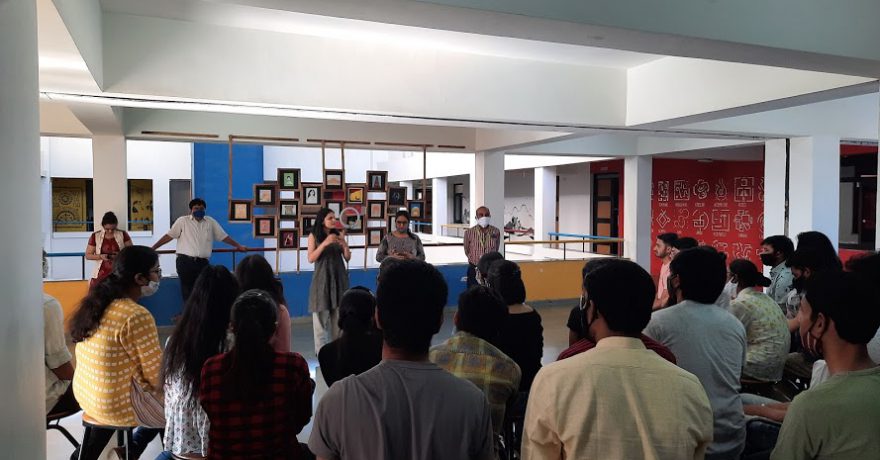
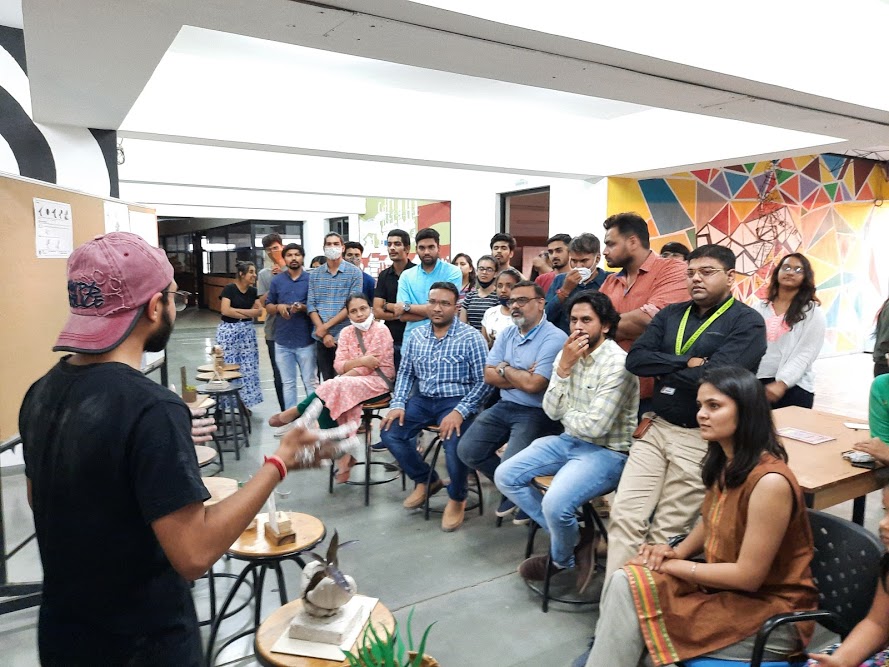
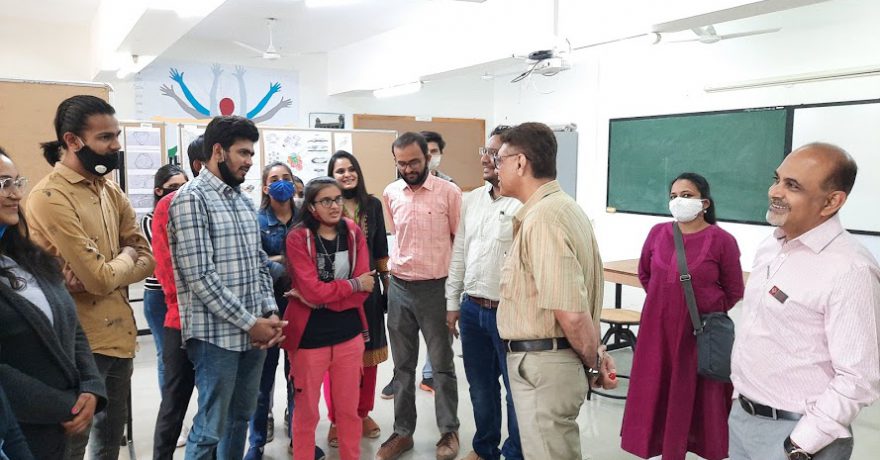
The studio space is a soul space for the Institute of Architecture and Planning as the learning at the institute is centered around a studio. The purpose of a studio is beyond a mere classroom as apart from the lectures and project work, a lot of hands-on work – "learning by doing" takes place in a studio space. Studios are large spaces where design work can happen and students can engage beyond instructional time and faculty guidance.

There are a total of 6 studios for BArch programme. Each studio is around 145 sq. Mts. in size and connected to a corridor and a courtyard in the centre. The studios are designed to allow maximum natural light and ventilation in the working space. The large open space in front of each studio is an engine for productive discourse. The design reviews and class discussions take place in this space. Each studio is ICT Enabled studio.
Fees

Tuition Fees

₹ -

Contact No.:

+91- (M) 8460652622 9974009275
+91- (M) 9712996113

Email

admission.ioa@ganpatuniversity.ac.in

Eligibility

Passed 10+2 examination with Physics, Chemistry and Mathematics as mandatory subjects with 50% in aggregate and 50% each subject. OR Passed Diploma examination with Mathematics as compulsory subject having obtained at least 50% marks (45% in case of candidates belonging to reserved category) marks in the aggregate. and Qualifying NATA (Or) Any other Aptitude Test conducted by Competent Authority of the State Government/ UT.

Program Outcome

  • Ability to apply knowledge of Art, science and technology in practice
  • Ability to identify, critically analyze, formulate and solve Design problems
  • Ability to select appropriate technology and techniques and use them with dexterity
  • Ability to design a system and process to meet desired needs within realistic constraints such as health, safety, security and environment.
  • Ability to devise and conduct exploration, analyze data and provide well informed conclusions in design process
  • Ability to understand the impact of global change, in a contemporary, economical, environmental, and societal context for sustainable development
  • Ability to function professionally with ethical response ability as an individual as well as in multidisciplinary teams with positive attitude
  • Ability to communicate and express effectively
  • Ability to appreciate the importance of goal setting and to recognize the need for life-long learning
  • To produce well informed socially responsible global citizen with sharp critical thinking skills having sound awareness about professional practice, planning, management, Building byelaws, ethics and values. They will have entrepreneurial spirit.

Program Educational Objectives (PEO)

  • To prepare graduates who will be successful professionals in the industry, government, academia, research, entrepreneurial pursuit, and consulting firms
  • To prepare graduates who will contribute to society as broadly educated, expressive, ethical, and responsible citizens with proven expertise
  • To prepare graduates who will achieve peer recognition; as an individual or in a team; through demonstration of good analytical, design, and implementation skills
  • To prepare graduates who will thrive to pursue life-long learning to fulfill their goals

Career Path

  • Equipped with professional architectural knowledge.
  • Competent in design and development.
  • Proficient in conducting site Investigation and analysis.
  • Good at Modern Technology Usage.
  • Emphasises on Environment Sustainability concerns.
  • Ethical.
  • Efficient in coordination with consultants.
  • Good at communication.
  • The programme follows modern dynamic curriculum with wide range of courses.
  • Wide range of electives nurture interests of students.
  • Students are encouraged to develop critical thinking.
  • Hands on practical experience is imparted through workshops.
  • Scholarship are given to meritorious students.
  • The Institute is equipped with State-of-the-art Material lab, Climate Lab and Computer lab.
  • The Institute has academically strong core faculties with diverse background.
  • Expert lectures and seminars by professionals and academicians are regularly organised.

Syllabus

New Syllabus
Subject Name Subject Type Subject Code Subject Credit Subject Comment Attachments
Architectural Design Studio I Core IA01ADS 4 Read More
BASICS OF DESIGN-I Core IA02BOD 6 Read More
Technical Representative Drawings - I Core IA03TRD 3
  • How to sharpen a pencil, Understanding of paper and other media, Exercises with lines in different directions, different intensities, hatches, Basic Understanding of coordinate systems.
  • Composition of a drawing and its graphic appeal.
  • Lettering and Calligraphy.
  • Exercises in geometry.
  • Development of Surfaces.
  • Planes, Orthographic projections.
Read More
Building Construction & Details - I Core IA04BCD 3
  • Lectures on basic construction of building.
  • Studio exercises and case studies.
  • Study of various contents of existing building through sketches & models.
  • Site visit.
Read More
Building Material - I Core IA05BM 2
  • Theory in the class with given assignments and practice questions, sketching and drawing, in class interactions, case studies & final exam and final submission of class works.
  • Site Visits: Wooden Saw mill, Brick Kiln, Cement Plant Visit.
Read More
History of Architecture - I Core IA06HOA 2
  • Lectures, Presentations, Movies, Discussions and Debates based upon the above syllabus.
Read More
Structure - I Core IA07STR 2
  • Tutorial based on course contents.
  • Making of models based on stability & load transfer concept.
  • Creative exercise based on course content.
Read More
Communication Skills - I Core IA08CS 2
  • Lectures, Presentations, Movies, Discussions and Debates based upon the above syllabus.
Read More
Workshop/Elective - I Elective IB09WS/ELE 2
  • Models from various above mentioned materials to explore and understand the basics of materials.
Read More
Related Study Programme - I Core IB10RSP 00
  • This RSP aims at creating understanding of inherent form and order in the built environment by observing it and analyzing by sketching and measure drawing.
  • Hand sketch also gives an opportunity to students for examining the systems, scale and architectural language of the built.
Read More
New Syllabus
Subject Name Subject Type Subject Code Subject Credit Subject Comment Attachments
Basics of Design-I Core IA02BOD 6
  • Relevant exercises in sketching and model making. Medium of sketching and exploration through techniques.
  • Thought process through surfaces, materiality and light.
  • Skill based exercises inducing architecture of communication through sketching & documenting architecture.
Read More
DESIGN STUDIO - II Core 3IIA01DS 4
  • Learning the basic principles of space making and form building through intensive design studio practice.
Read More
BASIC DESIGN - II Core 3IIA02BD 6
  • Emphasis is on two-dimensional representation of three-dimensional forms; development of basic skills in architectural design drawing and 3D modelling.
  • Through experiential hands-on design exercises, this studio will focus on the development of space/composition through the composition of tectonics and stereotomic assemblies. Rumbling between physical models, narrative statements, and drawing explorations, context inspired design processes will stress on analysis, abstraction, and refinement through peer and self-critique.
Read More
GRAPHICS AND TECHNIQUES - II Core 3IIA03GT 6
  • The course focuses on “Volumetric Understanding, Rendering and Diagrams” which enables students to represent ideas in third dimension.
  • This course introduces students to the fundamental techniques of architectural drawing and develop appropriate manual and computer skills for visualization and technical representation of built forms in different types of drawings. The course also helps in building cognitive and motor coordination skills. The course also enables students to represent designs in 2D and 3D rendered drawings.
Read More
BUILDING MATERIALS AND CONSTRUCTION - II Core 3IIA04BMC 4
  • The emphasis of the course is on “material driven design and construction systems.”
  • The course introduces Brick, Stone and Wood as primary building construction materials and develops a comprehensive understanding of construction based on material property, size and shape.
  • The focus is on understanding properties of materials, and various technical aspects related to masonry and frame construction and their finishing techniques.
Read More
STRUCTURE - II Core 3IIA05STR 2
  • The emphasis of the course is on “structural construction systems.”
  • The course develops a comprehensive understanding of construction and behaviour of structural components based on material property, size and shape.
  • Concepts of stress, strain and basic structural analysis are to be understood with reference to properties of materials.
Read More
HUMANITIES - II Core 3IIA06HUM 2
  • The emphasis is on approaching the built environment and space differentiation as critical features located in a broad social and cultural context. It stresses the cultural & political context from which settlement & structure arise. The emphasis is on challenging pre conceptions, developing visual intelligence and learning to read architecture as a shared cultural expression that registers and transcends time & space as all created structures embody a culture’s complex aspiration within material creation.
  • The course will provide introduction to Architectural typologies and terminologies.
Read More
COMMUNICATION SKILLS & PERSONALITY DEVELOPMENT Core 3IIA07CSPD 2
  • The course focuses on sharpening Communication Skills as an essential soft skill in the professional world and acquiring traits of a positive Personality. This course introduces students to essentials of successful professional communication in varied situations and contexts. The personality domain recognises the importance of developing an integrated sense of personal identity, a positive sense of self and a personal code of ethics.
Read More
PROFESSIONAL ELECTIVE – 2A Elective 3IIB08PE 2 Read More
Read More
TRANSDISCIPLINARY OPEN ELECTIVE - 2B Elective 3IIB09TOE 2 Read More
Read More
SUMMER PROGRAMME - I Core 3IIA10SP 0
  • The Summer Programme (SP) at the Institute of Architecture is a unique contribution to Architectural education. Initially called measure drawings, it is intended to take the students out into the field to get first-hand experience of traditional built environments. This subject recognizes the value of the traditional architecture as well as the importance of field experiences and travel in the learning of architecture. The students are encouraged to learn about not only the architectural form also related components of architectural relevance.
Read More
New Syllabus
Subject Name Subject Type Subject Code Subject Credit Subject Comment Attachments
Architectural Design & Detailing III Core 2IIIA01ADD 8
  • To Understand, Analyse and apply the building materials’ basic properties of building material to create Built environment & architectural form at the same time demonstrate ability to create certain ambiance and scale as resultant of material and structure.
Read More
Building Materials and Construction - III Core 2IIIA02BMC 6
  • To focus is on materials, their properties and applications, and their intrinsic relationship to structural systems and environmental performance.
  • To develop application based understanding of: the relationship of materiality to construction systems and techniques.
  • Understanding "Timber" as a building material and its application in a building along with its techniques used in different forms and joinery details of construction.
Read More
Read More
History of Architecture-II Core 2IIIA03HOA 2
  • To Learn the evolution of world architecture took place at different region in different era of time line in a chronological order.
  • To study and understand cultural, social, geographical aspects which influenced and played vital role for Egypt, Greek, Roman, Gothic architectural evolution.
  • To Study various architectural elements, building techniques of specific architectural style.
  • Overview how a town planning was carried out within geographical limits and requirements of those regions and community.
Read More
Structural Design and Systems III Core 2IIIA04SDS 2
  • Observe and evaluate how structural resolutions are important in realization of architectural design concept. At this stage, students shall be exposed to applications of principles of mechanics of rigid and deformable bodies in engineering applications.
  • Understand basic properties of solids and sections which influence their behaviour under the effect of various types of forces on fixed beam, Arches.
Read More
Building Services-I Core 2IIIA05BS 2
  • To Understand analyse and apply all basic Building services like Electrification, Lighting, communication, Vertical Transportation which enables the functions of the design in an active mode.
Read More
Site Survey & Levelling Core 2IIIA06SSL 2
  • To make students aware of how surveying and levelling is important in realization of architectural design concept. At this stage, students shall be exposed to applications of principles of Surveying and Levelling in planning.
  • To understand basic Techniques of surveying and levelling, Types of survey, measurement of angles, computation of areas.
Read More
Climate and Architecture Core 2IIIA07CL 2
  • Sense the Natural elements and climate which on a large scale impacts the built environment created through the design.
  • Apply various methods to inculcate the practices and approach which promotes the use of conventional ideas using climatic conditions which ultimately mitigate the distortion of natural resources.
Read More
Professional Elective-I Core 2IIIA08PE 2
  • To explore subjects and topics other than regular one which add value the knowledge gained.
Read More
Related Study Programme II Core 2IIIA09RSP 0
  • The Related Study Programme (RSP) at the Institute of Architecture is a unique contribution to Architectural education. Initially called measure drawings, it is intended to take the students out into the field to get first-hand experience of traditional built environments.
  • This subject recognizes the value of the traditional architecture as well as the importance of field experiences and travel in the learning of architecture.
  • The students are encouraged to learn about not only the architectural forms also related components of architectural relevance.
Read More
New Syllabus
Subject Name Subject Type Subject Code Subject Credit Subject Comment Attachments
Architecture Design and detailings- IV Core IVA01ADD 8
  • A study of human built form and community living based on lifestyle, culture, nature and economic forces.
Read More
Building Materials and Construction - IV Core 2IVA02BMC 6
  • The primary focus is on materials, their properties and applications, and their intrinsic relationship to structural systems and environmental performance.
  • Students will develop application based understanding of: the relationship of materiality to construction systems and techniques.
  • Understanding "RCC and Steel" as a building material and its application in a building along with its techniques used in different forms and joinery details of construction.
Read More
History of Architecture-IV Core 2IVA03HOA 2
  • To Learn the evolution of world architecture took place at different region in different era of time line in a chronological order.
  • Western: To study and understand cultural, social, geographical aspects which influenced and played vital role in development of the following eras Early Christian Architecture, Byzantine, Romanesque and Gothic architecture.
  • Indian: source of Islamic architecture in India, Imperial style, Provincial Style: Deccan, Jaunpur, Gujarat, Kashmir, Mughal.
  • To Study various architectural elements, building techniques of specific architectural style.
Read More
Structure design and system-IV Core 2IVA04SDS-IV 2
  • This subject is applications of structural engineering principles to design basic structural elements using of reinforced concrete as materials. This subject is specifically aim to develop understanding of various design philosophy, Indian codal provisions, design basis used in design of basic elements of framed structures and its detailing requirement.
Read More
Building Services-II Core 2IVA05BS 2
  • Site visits & Case studies for Acoustics, Building Automation system, Building security system.
  • Market surveys of types of Air conditioning system available in the market with its proper working criteria and functions and also add the upgradation coming in the system.
Read More
Site planning and management Core 2IVA06SPM 4
  • Methods of Database gathering and analysis to find out opportunities for site planning.
  • Understanding Principles of site planning, relation between built and up-built spaces.
  • Design integration of different services to the site and the building, and incorporation of by-laws.
Read More
Professional Elective-II Core 2IVA07PE 2
New Syllabus
Subject Name Subject Type Subject Code Subject Credit Subject Comment Attachments
Architectural Design & Detailing V Core 2VA01ADD 10
  • LO1: Spatial Relations of Spaces and Understanding the scale of the project.
  • LO2: Methods of Space programming, analysis, evaluation of design criteria and fundamentals of composite site planning.
Read More
Building Materials and Construction - V Core 2VA02BMC 6
  • LO1: Understanding various types of foundations and its application in the building according to the appropriate selection criteria.
  • LO2: Understanding about various roofing system and its construction details.
  • LO3: Recognizing various types of forces acting on different types of water tanks/swimming pools and its construction techniques.
  • LO4: Understanding various treatments required in the building like – water proofing and termite proofing.
Read More
History of Architecture-IV Core 2IVA03HOA 2
  • To Learn the evolution of world architecture took place at different region in different era of time line in a chronological order.
  • Western: To study and understand cultural, social, geographical aspects which influenced and played vital role in development of the following eras Early Christian Architecture, Byzantine, Romanesque and Gothic architecture.
  • Indian: source of Islamic architecture in India, Imperial style, Provincial Style: Deccan, Jaunpur, Gujarat, Kashmir, Mughal.
  • To Study various architectural elements, building techniques of specific architectural style.
Read More
Structural Design and Systems V Core 2VA04SDS 2
  • LO1: Behaviours and requirement of various types of foundation and requirement effect of ductile details in structure.
  • LO2: Select various design philosophies to plan, to draw structural layout and to understand analytical approach to be used in the design of structural elements.
  • LO3: Design & detail RC structures like Retaining Wall.
  • LO4: Apply the concept of earthquake resistant design in the building.
Read More
Building Services-III Core 2VA05BS 2
  • LO1: Understand the networking and supply chain of all services including to understand the working cycle to use the system properly and smoothly.
  • LO2: Understanding the importance of each service in details with its designing criteria through live case studies and onsite drawings.
  • LO3: To adapt newer and latest technology and equipment’s for modern and fundamental requirement of this services and also High tech applications and services to be implemented for all type of functional areas like residential, commercial, corporate and Industrial.
  • LO4: The brief understanding and importance of solid waste management through the understanding of drainage system should be provided.
Read More
Building Estimation and Specifications Core 2VA06BES 2
  • Study through practical site visits, presentations, case studies, tutorial, study of BOQ & workshop based on the application of theory to construction field.
Read More
Disaster Mitigation and Management Core 2VA07DMM 2
  • LO1: Understand disasters, disaster preparedness and mitigation measures.
  • LO2: Understand disaster management acts and guidelines along with role of various stack-holders during disasters.
Read More
Professional Elective III Elective 2VA08PE 2
  • LO1: Understanding the software and its application as a whole.
  • LO2: Learning the applications for various off purpose.
  • LO3: Learning the rendering process of the created model.
  • LO4: Overall learning presentation through the dedicated software medium.
Read More
Related Study Programme II Core 2VA09RSP 0
  • LO1: The Students will develop the skills & understanding of measure drawing.
  • LO2: Students will get the understanding of “synthesis of learning from various courses” by observing; registering & mapping of actual built buildings.
  • LO3: Programme outcome will be extremely valuable in creating knowledge base on architecture field not only in India but of nearby countries as well.
  • LO4: Production of Accurate and precise drawings of many a monument, institution, settlement in India, which become a basis for future research.
Read More
New Syllabus
Subject Name Subject Type Subject Code Subject Credit Subject Comment Attachments
Architectural Design & Detailing VI Core 2VIA01ADD 12
  • To enable the students to prepare working drawings of an architectural project and imbibe the significance of working drawings from the point of view for execution of the work on site and as important component of tender documents.
Read More
Building Materials and Construction - VI Core 2VIA02BMC 6
  • The primary focus is on interiors of the building and application method according to the materials, usage and aesthetics.
  • Students will develop application based understanding of the relationship of interior to construction systems and techniques.
  • Understanding contemporary building materials and its application in a building along with its techniques used in different forms and joinery details of construction.
Read More
History of Architecture-V Core 2VIA03HOA 2
  • To understand the terms modern, modernity, modernization and trace its meaning and Western: To study and understand cultural, social, geographical aspects which influenced and played vital role in development of the following eras Early Christian Architecture, Byzantine, Romanesque and Gothic architecture.
  • Indian: source of Islamic architecture in India, Imperial style, Provincial Style: Deccan, Jaunpur, Gujarat, Kashmir, Mughal.
  • To Study various architectural elements, building techniques of specific architectural style.
Read More
Structural Design and Systems VI Core 2VIA04SDS 2
  • This subject is applications of structural engineering principles to design basic structural elements using of steel as materials.
  • This subject is specifically aim to develop understanding of various design philosophy, Indian codal provisions, design basis used in design of basic elements of steel frame structures and its detailing requirement.
Read More
Building Services IV Core 2VIA05BS 2
  • Introduction to Toilet and Kitchen in detail.
Read More
Landscape Architecture Core 2VIA06LA 2
  • The primary focus is to introduce the students to Landscape architecture & its relevance and impact on Architecture.
  • Students will understand the relationship between the built and the un-built neighbourhood.
  • To develop the understanding of students regarding site and site planning.
Read More
Professional Elective –IV (Conservation Architecture) Elective 2VIA07PE 2
  • Introduction to Conservation and Architectural Conservation.
  • Emergence of Conservation as a Subject and as a Profession.
  • To understand the basic Principles of Conservation.
  • Understanding form global and Indian case studies.
Read More
SUMMER PROGRAMME-III Core 2VIB08SP 0
  • The Summer Programme (SP) at the Institute of Architecture is a unique contribution to Architectural education. Initially called measure drawings, it is intended to take the students out into the field to get first-hand experience of traditional built environments.
  • This subject recognizes the value of the traditional architecture as well as the importance of field experiences and travel in the learning of architecture.
  • The students are encouraged to learn about not only the architectural form also related components of architectural relevance.
Read More
New Syllabus
Subject Name Subject Type Subject Code Subject Credit Subject Comment Attachments
Architecture design Studio- VII Core VIIA01ADS 16
  • Architectural Insert in an Urban Context / Mass Housing or Township.
Read More
Professional Practice - I Core VIIA02PP 3
  • To understand basic concepts of business practice of Architecture, Construction Execution, Management and Working methodology.
  • The course is structured to allow students to have hands on practical practices and approach in the field of Architecture and Construction.
Read More
Advance Building Construction Core VIIA03ABC 3
  • Building facades, Dry walls, special constructions, Glass Buildings & modern urban Architecture.
  • To understand advanced Building Technology to accommodate Hi-tech & sustainable aspects.
Read More
Environment Science Services - V Core VIIA04ESS 2
  • Probable disasters, Disaster management: general approach at society/community, city level, urban planning strategies & habitat design strategies for disaster mitigation, resource management during disasters, strategies for recovery.
Read More
VIIB05 WS/ELE Elective Workshop/Elective-VII 2
  • Effect of Built spaces on human psyche; visual aspects, visual control, visual art appreciation.
  • To bring out creativity, imagination, originality and innovations in design.
  • Designing various products of day to day life, enhance its functional and aesthetic values.
Read More
RELATED STUDY PROGRAMME - IV Core VIIB6RSP 0 Read More
New Syllabus
Subject Name Subject Type Subject Code Subject Credit Subject Comment Attachments
Architectural Design Studio-VIII Core VIIIA01ADS 18
  • The idea of space, Design, Development in urban context.
  • To deal with and resolve complex issue into a valid expression of architectural character and urbanism.
Read More
Research Skills and Methodology Core VIIIA02RSM 4
  • To generate awareness in research and meaning of systematic search with comprehensive introduction of technical documentation.
  • Understanding the need for scientific research in fundamental Architectural Design thoughts and methods and applied fields to architecture and built environment.
Read More
Professional Practice – II Core VIIIA03PP 2
Workshop/Elective-VIII Core VIIIB04WS/ELE 2
Related Study Programme Core VIIIB05 RSP 0
New Syllabus
Subject Name Subject Type Subject Code Subject Credit Subject Comment Attachments
PRACTICAL TRAINING Core IXA01PT 26
  • Office Training (Practical Training).
Read More
New Syllabus
Subject Name Subject Type Subject Code Subject Credit Subject Comment Attachments
Design Thesis Core XA01DT 26
  • Large-scale project handling and exposure to specific requirement, technology and approach to come up with conclusions, necessity and an Architectural solution.
Read More